

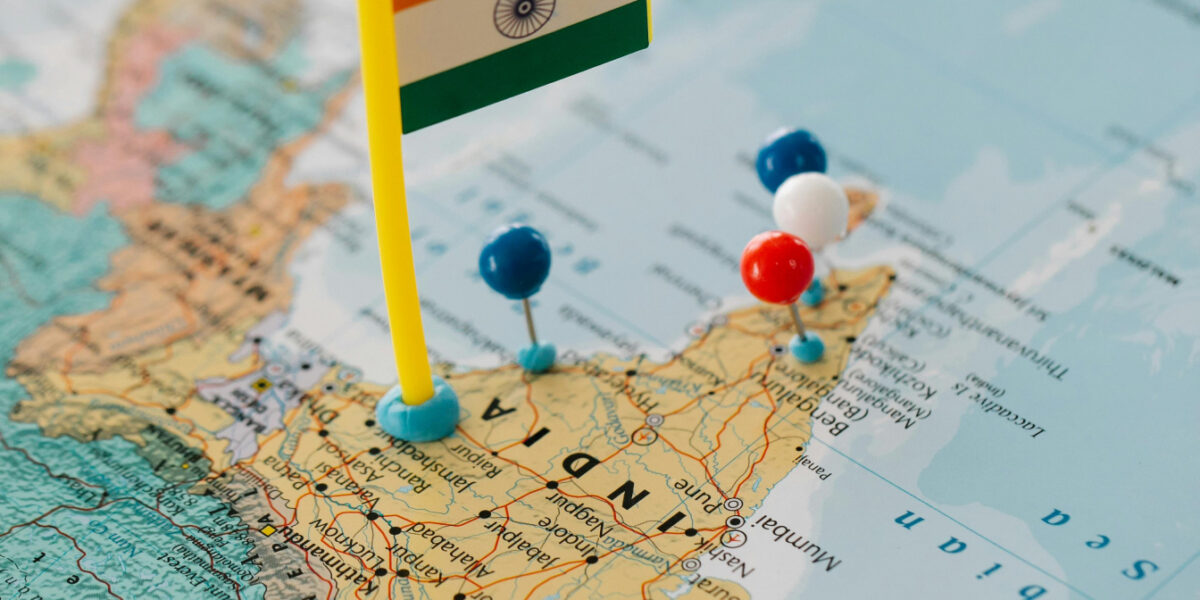
Amjad Hossein, an Indian writer/activist, reflects on the 100th anniversary of the Hindutva supremacist organisation the RSS. He examines its growth from a handful of ideologues and members to becoming the biggest membership extremist organisation and militia in the world, now running the world’s largest democracy.
India: The RSS — A Hundred Years of Terrorising Muslims
The Rashtriya Swayamsevak Sangh (RSS) marked its one hundredth anniversary in 2025. Founded in 1925, the RSS has evolved from a small, cadre-based cultural movement into the nucleus of a vast political ecosystem that shapes governance, education, media, and civil society in India. Today, it stands as one of the most influential ideological organisations operating within a democratic system. It is the most significant extremist political movement in the world, with more than five million members, trained in ideology and methods of fascist political violence. Its influence extends well beyond national borders, increasingly shaping diaspora politics and interacting with far-right movements abroad.
While the RSS describes itself as a cultural and voluntary organisation, a substantial body of scholarship and human rights documentation demonstrates that its long-term project has centred on redefining Indian nationhood in explicitly majoritarian terms. This has entailed the marginalisation and targeting of religious minorities—particularly Muslims—through ideology, policy, and institutional transformation.
This article examines three interlinked dimensions:
- The ideological and institutional foundations of the RSS project
- Its consolidation within the Indian state since 2014
- The export of Hindutva ideas, organisational practices, and digital tactics to the United Kingdom, Canada, and the United States, including their role in transnational Islamophobia and communal polarisation.
Taken together, these dynamics illustrate how a domestically rooted movement has become part of a broader global ecosystem of ethnonationalism. This is not too dissimilar to how Zionism took root in the Western world, eventually penetrating the Muslim world through the creation of Israel.
Ideological Foundations: Nation, Culture, and Hierarchy

The RSS was founded in 1925 by Keshav Baliram Hedgewar, drawing on Hindu revivalist thought that defined Indian identity as inherently Hindu. This conception rejected civic nationalism and co-existence in favour of cultural homogeneity.
The ideological foundations were systematised under M.S. Golwalkar, whose 1939 text “We, or Our Nationhood Defined” argued that minorities could remain in India only if they accepted Hindu cultural dominance and relinquished their claims to equal citizenship. Golwalkar approvingly cited European ethnonationalist models from the interwar period, including Nazi Germany, as examples of cultural cohesion. ¹
Although contemporary RSS discourse avoids explicit racial language, its core assumptions remain influential:
- A dominant cultural-religious identity defines the nation.
- Minorities must assimilate rather than claim equality.
- Pluralism weakens national unity.
- Loyalty is measured through conformity.
These principles underpin what scholars describe as civilisational nationalism rather than civic nationalism. The concept of a civilisational incompatibility between Islam and Muslims forms a key narrative of White, Jewish and Hindutva supremacists.
Early Mobilisation and the Logic of Provocation
From its early years, the RSS combined ideological training with the typical fascist-style street-level mobilisation. One of the earliest recorded episodes occurred in Nagpur in 1927, when RSS activists deliberately violated established intercommunal agreements during a religious procession outside a mosque, contributing to communal violence. Scholars identify this episode as an early instance of a pattern that later became institutionalised: provocation followed by mobilisation and consolidation. ²
This approach—manufacturing grievance to build cohesion—would later recur in multiple contexts, from temple–mosque disputes to street-level confrontations during religious festivals.
Organisational Architecture and Institutional Penetration
The RSS developed an unusually durable and decentralised organisational model known as the Sangh Parivar. It includes:
- Bharatiya Janata Party (BJP) – electoral arm
- Vishwa Hindu Parishad (VHP) and Bajrang Dal – mobilisation and enforcement
- Vidya Bharati – education network
- Trade unions, student, and women’s organisations
- Professional associations and policy forums
- Muslim Rashtriya Manch – outreach body claiming Muslim representation.
This structure allows the movement to operate simultaneously in civil society, politics, education, and culture while maintaining plausible deniability when violence or harassment occurs. Analysts describe this as a “distributed ideological system” capable of long-term institutional capture. ³
Education and the Production of Ideology
Education has been central to the RSS strategy. Vidya Bharati operates more than 17,000 schools, shaping the worldview of millions of students.
Ethnographic research documents several recurring features: ⁴
- Ritualised nationalism and daily pledges
- Militarised discipline and hierarchy
- Portrayal of Muslims as historical aggressors
- Marginalisation of Islamic contributions to Indian civilisation
- Presentation of Hindu civilisation as timeless, unified, and under siege
These narratives normalised historical myths long before they became politically salient. The claim that the Babri Masjid stood on the birthplace of the deity Ram, for example, circulated for decades through textbooks and examinations before becoming a mass political demand. ⁵
Education thus functioned not merely as instruction, but as ideological reproduction.
The Babri Masjid and the Normalisation of Majoritarian Politics
The demolition of the Babri Masjid in 1992 marked a watershed moment. It demonstrated the effectiveness of sustained ideological mobilisation combined with mass politics. The event was not spontaneous but followed years of organised campaigning, narrative construction, and mobilisation by RSS-affiliated groups.
Subsequent judicial and political developments—culminating in the construction of the Ram Mandir—reinforced the perception that sustained majoritarian mobilisation could reshape constitutional outcomes. This became a template for future disputes involving religious sites and historical memory.
From Ideology to State Power After 2014
The BJP’s victory in 2014 enabled unprecedented institutional alignment between the state and the RSS ecosystem.
Citizenship and Legal Status
The Citizenship Amendment Act (CAA) introduced religion as a criterion for fast-track citizenship, excluding Muslims. When paired with the proposed National Register of Citizens (NRC), this framework raised concerns of mass statelessness. In Assam, 1.9 million people were excluded from the NRC, disproportionately affecting Muslims. ⁶
Criminal Law and Surveillance
Several states introduced “anti-conversion” or “love jihad” laws, which reverse the burden of proof and have been disproportionately applied to Muslims. Preventive detention statutes and counterterror legislation are used expansively, often without conviction.
Cow Protection and Vigilantism
Expanded cow protection laws have coincided with a sharp rise in mob violence. Independent databases document hundreds of lynching incidents since 2014, with Muslims comprising the majority of victims. ⁷
The Uttar Pradesh Model
Under Chief Minister Yogi Adityanath, Uttar Pradesh has become a testing ground for assertive governance methods aligned with Hindutva ideology. Key features include:
- Demolition of homes and businesses without judicial process
- Preventive detention and mass arrests following protests.
- Increased police “encounter” killings
- Public symbolism framing state power as moral discipline.
Human rights organisations describe these measures as forms of collective punishment disproportionately affecting Muslims. ⁸
Social and Cultural Marginalisation
Structural exclusion now shapes many aspects of Muslim life:
- Employment: Declining representation in public-sector employment
- Housing: Open discrimination and enforced segregation
- Education: Hijab bans, closure of minority institutions
- Justice: Longer pretrial detention and lower bail rates
Cultural erasure has accompanied these trends through textbook revisions, renaming of cities, and reinterpretation of historical monuments.
Exporting Hindutva: Transnational Networks and Diaspora Politics
Diaspora Infrastructure
Over the past three decades, organisations aligned with or sympathetic to the RSS have expanded across the United Kingdom, Canada, and the United States. These include cultural associations, temples, student groups, professional networks, and charities. While many engage in legitimate community activities, researchers have documented ideological links, shared leadership, or coordination with Hindutva organisations in India.
Diaspora fundraising has played a role in supporting political mobilisation in India, while overseas chapters provide legitimacy and soft power.
The UK Case: Leicester and Beyond
The communal unrest in Leicester in 2022 marked a turning point in public awareness of Hindutva-linked mobilisation in the UK. Clashes between groups of young men following cricket matches escalated into targeted harassment of Muslim neighbourhoods.
Subsequent investigations by journalists and civil society groups found that:
- Organised networks with ideological links to Hindu nationalist groups amplified tensions.
- Online disinformation and inflammatory narratives circulated rapidly on WhatsApp, Telegram, and Twitter
- Some organisers had connections to transnational Hindutva organisations.
- Anti-Muslim narratives framed Muslims as demographic or cultural threats.
While the majority of British Hindus rejected violence, the episode highlighted how imported ideological frames can destabilise local community relations when combined with online mobilisation. A similar drive through Muslim areas of Leicester in 2025 has been alleged to have been part of the 100th anniversary celebrations of the RSS.
Canada and the United States
In Canada, academic research and media investigations have documented the presence of Hindutva-aligned groups active on university campuses, in temples, and within diaspora associations. Some have promoted narratives denying discrimination against Muslims or justifying violence in India.
In the United States, Hindutva advocacy groups have increasingly engaged in lobbying, political donations, and social media campaigning. Studies by civil society organisations have documented overlaps between Hindu nationalist networks and broader far-right ecosystems, particularly around Islamophobic and anti-immigrant discourse.
Digital Ecosystems and Online Islamophobia
A critical vector for the globalisation of Hindutva has been social media.
Coordinated Online Behaviour
Researchers and investigative journalists have documented:
- Bot networks amplifying pro-Hindutva hashtags.
- Coordinated harassment campaigns targeting journalists, academics, and Muslim activists.
- Disinformation campaigns portraying Muslims as violent, disloyal, or demographically threatening.
- Cross-platform circulation of memes, videos, and narratives in English and regional languages
These campaigns often operate transnationally, with content originating in India circulating rapidly in diaspora networks.
Narrative Convergence with Western Far Right
Online discourse reveals strong convergence between Hindutva activists and Western far-right movements:
- “Great Replacement”–style demographic fears
- Claims that Islam is incompatible with democracy.
- Portrayals of Muslims as security threats
- Framing multiculturalism as civilisational decline
Researchers describe this as a form of networked ethnonationalism, where distinct movements reinforce one another through shared narratives rather than formal alliances. ⁹
Implications for Democratic Governance
The RSS case illustrates how modern ethnonationalist movements operate through:
- Long-term institutional capture
- Cultural and educational influence
- Legalism rather than overt authoritarianism
- Strategic use of grievance and victimhood
- Digital mobilisation and transnational networking
These strategies increasingly appear in Western democracies facing polarisation and declining trust in institutions.
Conclusion
The RSS was founded as an anti-Muslim movement. A century after its founding, the RSS has evolved into one of the most influential ideological movements operating within a democratic framework. Its success demonstrates how sustained cultural mobilisation, institutional penetration, and strategic use of law can reshape democracy from within.
For India’s Muslims, this transformation has brought growing legal insecurity, social marginalisation, and exposure to violence. Internationally, the spread of Hindutva-aligned narratives shows how ethnonationalist movements learn from one another and adapt across borders.
“For Muslims in India and outside, there is a serious need for introspection. Over 100 years of the RSS movement’s growth, why did Muslims not recognise this threat or mobilise their collective local and global resources to combat it?
The challenge posed by such movements is not confined to India. It raises broader questions about how democracies safeguard pluralism, regulate transnational ideological networks, and respond to digitally mediated hate.
Understanding the RSS as both a national and a global phenomenon is therefore essential—not only for assessing India’s democratic trajectory but also for recognising emerging patterns of hateful ideologies and exclusionary politics worldwide.
References
- Golwalkar, We, or Our Nationhood Defined (1939).
- Christophe Jaffrelot, The Hindu Nationalist Movement, and Indian Politics.
- Thomas Blom Hansen, The Saffron Wave.
- Nandini Sundar, ethnographic research on RSS education.
- Romila Thapar et al., Ramjanmabhoomi–Babri Masjid: A Historian’s Report.
- Government of India, NRC Assam data (2019).
- IndiaSpend / FactChecker lynching databases.
- Human Rights Watch reports on Uttar Pradesh.
- Institute for Strategic Dialogue, reports on transnational far-right networks.
Leave a Reply