

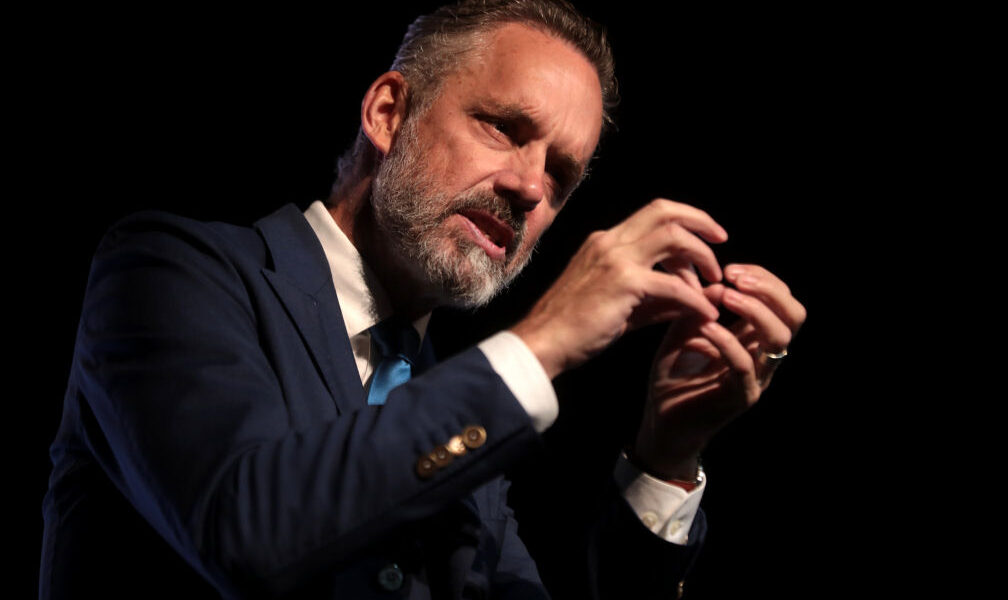
Jahangir Mohammed examines the role of Jordan Peterson in the revival of ideas of white supremacy, which have now become mainstream across Europe and the US. A must-read for those who want to understand the rise in contemporary White nationalist politics
Jordan Peterson: The Revival of Scientific Racism and White Supremacy.
In the past decade, few figures have shaped the ideological battlefield of the “culture wars” as profoundly as Jordan B. Peterson. A Canadian psychologist and professor, Peterson rose to prominence as a critic of political correctness and gender identity legislation, which has appealed to many men. However, his focus on gender wars obscured more dangerous ideas.
Beyond the viral lectures and bestselling books, his influence runs deeper—he has become a central intellectual figure in reviving long-discredited ideas about biological determinism and racial and civilisational hierarchy. Through a veneer of scientific objectivity, Peterson has contributed to the resurrection and popularisation of the ideology of scientific racism.
This article examines Jordan Peterson’s ideas and his role in popularising scientific racism, which has not been widely understood. The attraction of many to his ideas overlooks the ideological roots of his worldview, which align with traditions of racial and civilisational hierarchy. The article also briefly reflects on how the combination of psychologists, academics, and influencers, armed with populist views on race, has contributed to the rise of racial propaganda disguised as truth, which has now permeated mainstream politics in the USA and the UK. This should deeply concern us all.
The Racist Foundations of Psychology
Scientific racism is the pseudoscientific belief that certain races are inherently superior or inferior to others, often using biology or genetics as justification. Psychology was developed in the colonial era and was used to validate slavery, segregation, and the marginalisation of non-European peoples. In the 20th century, the rise of eugenics and intelligence testing gave further pseudo-scientific weight to these ideas. Pioneering figures include Francis Galton (Darwin’s cousin), who founded the eugenics movement, arguing for white racial superiority. At the same time, intelligence testing pioneers such as Charles Spearman and Henry Goddard promoted theories of innate cognitive differences between racial groups. Psychologists such as Lewis Terman and Carl Brigham, both of whom were involved in the development of IQ testing, played significant roles in perpetuating the notion that genetic or racial categories could be used to measure and determine intelligence. Although much of this pseudoscience has been discredited, remnants of these ideas persist in influencing contemporary political and cultural narratives. Individuals like Charles Murray and Richard Herrnstein, co-authors of The Bell Curve (1994), have more recently contributed to the revival of the theory that intelligence is genetically determined and that racial minorities, particularly Black individuals, are inherently less intelligent.
The UN’s Rejection of Scientific Racism
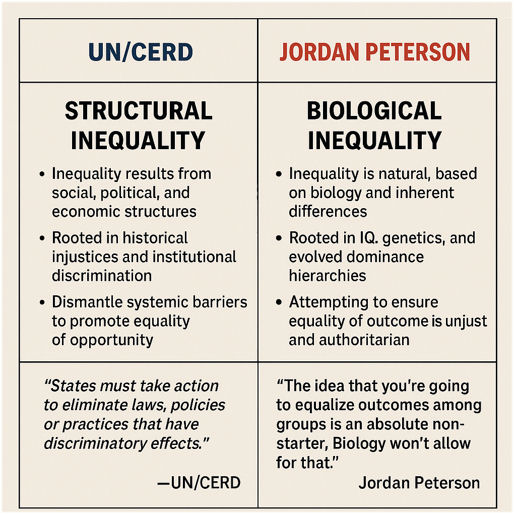
Scientific racism and eugenics hit home in Europe with the rise of the German Nazi regime and its ideology of racial supremacy and hierarchies in 1945. The Jewish people and other minorities suffered as victims of this racism. In the aftermath of World War II, the United Nations Committee on the Elimination of Racial Discrimination (CERD) has long rejected the concept of scientific racism. According to the UN, racism is not a result of inherent differences between races, but a product of historical, social, and political processes. In its 2001 World Conference Against Racism, the UN emphasised that “racism and discrimination… are rooted in the exploitation of the socially and economically disadvantaged.”
In its 2022 statement, CERD reaffirmed that states must address “the root causes of racial inequality, including historical injustices, social exclusion, and structural and institutional racism.” This approach replaces outdated notions of genetic determinism with a focus on life chances, access to education, employment, housing, healthcare, and representation.
The UN’s position underscores the significance of recognising race as a social construct, shaped by historical and cultural forces rather than biological ones. Disparities in wealth, education, and health outcomes are the result of these forces, rather than being inherent biological traits. This perspective aligns with modern sociological and psychological research, which recognises that human life chances are shaped by environment, culture, and historical context, not by immutable genetic traits.
Yet today, this consensus is under attack. Figures like Peterson reject these frameworks, reviving a narrative where inequality is not a matter of life chances, but of nature.
The Biological Turn in Post-9/11 Politics
The War on Terror marked a turning point in the return of biological essentialism. Western governments increasingly framed terrorism as a result of cultural/religious or even genetic deficiencies, rather than geopolitical grievances or structural violence. Programmes sought to detect “neurological markers” for extremism, and whole populations were pathologised through the lenses of evolutionary psychology and neuroscience.
These developments laid the groundwork for Peterson’s ideas, which treat behaviour and social structure as biologically hardwired. His framework erases the role of politics and power, reducing inequality to a matter of nature.
Peterson’s Hierarchical Worldview
Peterson’s psychological framework blends Jungian archetypes (symbolic, mythic) with evolutionary biology (scientific, genetic) to argue that “The stories we tell—and the social structures we live in—are biologically hardwired into us.” For example, he claims the Jungian archetypal Hero aligns with evolutionary success (overcoming chaos, winning dominance). The archetypal Great Mother reinforces a male-dominated order.
Peterson’s approach is controversial as it naturalises inequality, suggesting that existing power dynamics (gender, race, class) are inevitable or desirable. It dismisses structural critiques, undermining the notion that social outcomes are shaped by injustice or discrimination. Instead, it revives scientific racism; his biological framing echoes earlier arguments that racial or gender differences justify unequal treatment.
Jordan Peterson tends to avoid overt endorsements of racial hierarchies; however, several of his statements and references implicitly reinforce racialised views of intelligence, culture, and inequality. Below are quotes and paraphrased arguments from his books, lectures, and interviews that can be seen as ideas associated with scientific racism, racial hierarchy, or civilisational superiority, especially when framed as neutral science or common sense.
In Maps of Meaning (1999) and 12 Rules for Life (2018), he argues that dominance hierarchies are natural and inevitable, like trees. Famously, he compares humans to lobsters in one of his most cited quotes. His “lobster theory” is featured in his book, 12 Rules for Life: An Antidote to Chaos (2018).
“Dominance hierarchies are older than trees… a third of a billion years old… You don’t get to just blame those things on the oppressive patriarchy. It’s a much deeper problem.”
“If you’re ever attacked by a bigger animal, don’t panic. Stand up straight with your shoulders back… even lobsters do it. Dominance hierarchies are older than trees. The nervous system that responds to defeat with chemical depression is millions of years old. You don’t have the right to feel secure and confident unless you are competent and dominant.”
— Jordan B. Peterson, 12 Rules for Life, Rule 1: “Stand up straight with your shoulders back”.
This passage exemplifies Peterson’s argument that social hierarchies are not cultural constructs but biologically ancient and universal. He uses the behaviour of lobsters to suggest that hierarchical competition is hardwired into human nature.
On Intelligence and Race
Peterson has defended The Bell Curve (1994), arguing that IQ differences between racial groups are partly genetic and help explain social inequality. These comments echo arguments used historically to justify racial hierarchies in education, employment, and immigration policy.
“The data on race and IQ are uncomfortable, but the uncomfortable facts have to be contended with. The Bell Curve hasn’t been discredited.”
— Interview with Joe Rogan Experience #877, 2016
“If you take IQ seriously, and you should… then group differences in IQ have to be taken seriously too.”
— Lecture excerpt, 2017, University of Toronto Psychology class.
“Murray’s been treated absolutely reprehensibly… The data he used is mainstream intelligence research… There’s nothing in The Bell Curve that’s particularly scientifically reprehensible.”
— Jordan B. Peterson, Interview with Ezra Klein, The Ezra Klein Show, Vox Media, March 2018
By praising a widely discredited text linking race to IQ, Peterson legitimises the foundations of modern scientific racism.
On Western Civilisation and Cultural Superiority
These statements below present Western (implicitly white-majority) societies as inherently superior and others as needing to catch up—a core assumption of racialised civilisational thinking and something which has become even more apparent in the last couple of years.
“The West is far and away the best culture the world has produced.”
— YouTube Q&A, January 2018
“If you’re a young man in, say, Africa or the Middle East, who’s disaffected and resentful, then Western values and freedoms may not appeal to you. That doesn’t mean the West is the problem—it means they haven’t adopted our values yet.”
— Speaking tour interview, UK, 2019
On Immigration and Cultural Compatibility
“Cultures are not equal. That’s a preposterous proposition. Some cultures are better.”
— Speech at Cambridge Union, 2018
“It’s a mistake to assume that mass immigration from radically different cultures into the West is just going to work out fine… some cultures simply don’t work.”
— YouTube lecture, 2017.
These remarks lend themselves to the argument that cultural difference is inherently problematic—an idea often used to code migrants and Muslims as incompatible with Western society.
On Crime and Identity
“There’s a clear connection between fatherlessness, low IQ, low conscientiousness and crime. These are not random. They are predictors. If one group has more of them, we should expect higher crime. That’s not racism—it’s reality.”
— Interview with Dave Rubin, 2018
This framing implies that social problems within racialised communities are the result of innate deficits rather than structural disadvantage, echoing classic scientific racist logic.
The Christian Nationalist/Zionist Alignment
Peterson has evolved from psychologist to populist ideological warrior. He now also appears with hardline supporters of Israel, appearing with figures like Ben Shapiro and Dennis Prager, and treating the likes of Tommy Robinson as a persecuted free speech/cultural warrior.
Speaking in Jerusalem, Peterson described Israel as an outpost of Western civilisation and has since even seemed to endorse a call for the genocide of Palestinians in a now-deleted tweet. Such framing mirrors white nationalist and civilisational narratives. Peterson idealises Western civilisation as rooted in a “Judeo-Christian” tradition under siege by multiculturalism and secularism. Even worse is his defence of Israel and Ashkenazi intelligence theories, coupled with his silence on Palestinian oppression, which aligns him with far-right Christian Zionism. This selective philosemitism serves a civilisational narrative; one that uplifts white Judeo-Christian identity and frames Islam and non-Western cultures as regressive or dangerous.
“Israel is an outpost of Western civilisation in a very dangerous region. If Israel is not supported, the West is going to pay for that.”
— Jordan B. Peterson, speech during a visit to Israel, 2022
“Finish the job.”
— Jordan B. Peterson, response to Israeli Knesset member Danny Danon on X (formerly Twitter), October 11, 2023
“So, what’s the story? No conspiracy. Get it? No conspiracy,” he concluded. “Jewish people are over-represented in positions of competence and authority because, as a group, they have a higher mean IQ.”
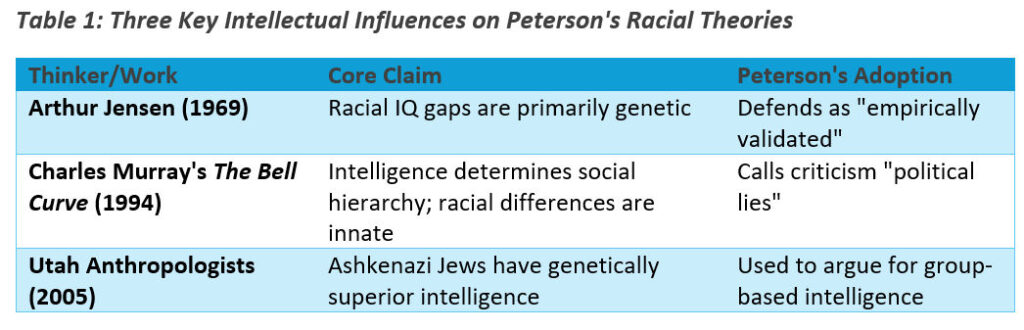
Table 1: Three Key Intellectual Influences on Peterson’s Racial Theories
| Thinker/Work | Core Claim | Peterson’s Adoption |
| Arthur Jensen (1969) | Racial IQ gaps are primarily genetic | Defends as “empirically validated” |
| Charles Murray’s The Bell Curve (1994) | Intelligence determines social hierarchy; racial differences are innate | Calls criticism “political lies” |
| Utah Anthropologists (2005) | Ashkenazi Jews have genetically superior intelligence | Used to argue for group-based intelligence |
Andrew Tate: Peterson’s Echo
Andrew Tate’s statements and ideology often reinforce themes closely aligned with biological determinism, scientific racism, and social Darwinism, especially in the way he discusses gender, success, race, and hierarchy.
While Tate doesn’t articulate his views in academic or scientific terms like Jordan Peterson, his rhetoric is saturated with the assumptions and values of biologically rooted social inequality, and many of his comments, especially around migrant culture and criminality, are laced with notions of racial cultural hierarchy, dominance and survival of the fittest.
Tate’s appeal to young men is dangerous because it:
- Normalises a racialised, biologically deterministic view of success.
- Promotes white supremacist-adjacent ideology under a banner of “real masculinity.”
- Reduces social justice to “weakness” or “excuses.”
Many of his followers gravitate to his anti-women, anti-immigrant, and anti-woke rhetoric, reinforcing a worldview in which natural hierarchies justify inequality, a hallmark of scientific racism.
Scientific Racism in Today’s Politics and the Rise of White Nationalism
Peterson’s critiques of critical race theory (CRT), which he views as a Marxist-driven attempt to undermine individualism, have found a significant audience among white nationalist groups, conservative politicians, and those now in power in the United States. His rejection of CRT and minority political activism, which challenge how systems of power perpetuate racial inequalities, is framed as an attack on free speech and individual liberty. In this sense, Peterson’s ideas provided intellectual cover for the resurgence of white nationalism, particularly in the context of debates over immigration, affirmative action, and diversity.
Nationalist movements in Europe and the United States have increasingly employed rhetoric that connects racial disparities to cultural or criminal deficiencies. The ideas of scientific racism are now back vigorously in mainstream politics. In the UK, for instance, politicians like Nigel Farage have focused on the criminality of Muslim migrants as a key element of their populist appeal. Similarly, in the United States, figures associated with the “alt-right” and the Trump administration have used arguments to stoke fears about the decline of Western civilisation due to immigration from non-European countries.
The intersection of Peterson’s ideas with white nationalist rhetoric is not incidental. Peterson’s notion that hierarchies are natural and inevitable can easily be adapted to justify nationalist and exclusionary ideologies. This is especially evident in how Peterson’s ideas about human nature are appropriated by far-right groups to promote anti-immigrant sentiments and to argue that racial and cultural groups should be treated differently based on inherent differences in worth and capability. A detailed table illustrating how Peterson’s ideas have found expression in mainstream politics can be found in Appendix A. These are summarised in five areas.
- Migration and Criminality: The idea that migrants are more inclined to criminality has been a common theme of both neo-conservative and right-wing politicians. The Muslim grooming gang debate in the UK has not been associated with Pakistani culture. It has turned into conspiracy theories about Muslim and Pakistani rape gangs raping one million white girls. In the last US election campaign, Trump claimed Haitian illegal migrants were eating people’s pets.
- Reform’s Demand for Crime Statistics: The political movement Reform in the UK has been vocal in calling for race-specific crime statistics, particularly focusing on the South Asian Muslim community. This demand links practices such as “cousin marriages” to “low IQ” and “genetic diseases,” perpetuating harmful stereotypes. This narrative also feeds into the idea that certain cultural or ethnic groups are genetically predisposed to criminality or social dysfunction, reinforcing the racialisation of crime.
- Colonial History in the UK: The refusal to teach colonial history in schools in the UK has become a significant point of debate, with many conservative figures arguing that focusing on Britain’s colonial past paints the country in an unfair light. The reluctance to address the legacies of empire in public education perpetuates the denial of historical responsibility, much like the arguments of scientific racists who justified colonialism through notions of racial superiority and cultural assimilation.
- Civilizational Incompatibility: The argument of civilisational incompatibility is a key component of contemporary nationalist rhetoric. This discourse suggests that certain cultural groups, particularly Muslims or migrants from non-Western countries, cannot fully integrate into Western societies because of irreconcilable cultural or religious differences. Figures like Peterson, although not explicitly promoting this view, reinforce it through their emphasis on the superiority of Western civilisation and the importance of maintaining cultural identity.
- Trump, DEI, and the Rejection of Structural Racism: The Trump administration’s attack on Diversity, Equity, and Inclusion (DEI) initiatives provides a direct example of the kind of cultural backlash that figures like Peterson have championed. DEI policies are designed to address systemic inequalities and promote fairness in hiring, education, and public life. Yet, Peterson and other critics argue that such policies are discriminatory, claiming that they create a “victimhood culture” and undermine meritocracy. This attack on DEI is part of a broader ideological push to reject the idea that structural racism exists. By framing disparities in racial and economic outcomes as the result of individual choices or inherent traits, figures like Peterson help to perpetuate the notion that racism is no longer a systemic issue, but rather a personal failing. This narrative aligns with the right-wing backlash against civil rights progress and the increasing prominence of white nationalist groups.
Conclusion
Jordan Peterson’s influence has sparked a resurgence of ideas that have long been discredited by both scientific research and social progress. His views on hierarchy, inequality, and the role of race in shaping life outcomes echo the language of scientific racism, which has historically been used to justify discrimination and exclusion. While Peterson presents himself as a champion of free speech and individual responsibility, his rhetoric has found fertile ground among white nationalist groups and conservative politicians, fuelling a cultural backlash against critical race theory and systemic racism.
The rejection of scientific racism, as outlined by the UN and supported by contemporary research, represents a more accurate and ethical understanding of race and inequality. By challenging the notion that biological differences explain social disparities, we can move toward a more just and equitable society—one that recognises the importance of structural, cultural, and historical factors in shaping human lives. The revival of scientific racism, fuelled by figures like Peterson, threatens to undo the progress made in understanding and addressing the roots of inequality. We must remain vigilant in rejecting these harmful ideas.
Peterson does not present himself as a racist, but his project aligns with the goals of white supremacy. Scientific racism does not return with swastikas; it returns through bestselling books, university lectures, and debates. It wears a suit. It cites academic sources. It calls itself rational. Jordan Peterson may not present himself as a racist. Still, his ideas breathe new life into an old and dangerous ideology, which will lead to the revival of white racial supremacy.
 Appendix A
| Concept | Scientific Racism (Historical Context) | Jordan Peterson’s Perspectives | Expression in Contemporary Politics/Debates (US and UK) |
| Biological Determinism | The belief that racial differences in intelligence and behaviour are inherent and biological. | Emphasis on genetic and individual differences in intelligence and behaviour; downplays social and environmental factors. | White nationalist rhetoric uses biological differences to justify unequal treatment of minorities. In the UK, Farage and others often link migrant groups to criminality and lower societal value. |
| Intelligence and Race | The idea that certain races (especially Black people) are genetically less intelligent than others. | Peterson downplays systemic causes of inequality, emphasising individual competence and abilities, which he believes are linked to personality traits and genetic predisposition. | Conservative politicians and media (e.g., Donald Trump and the UK’s Brexit figures) use “intelligence” as a coded way to argue for cultural superiority, particularly in immigration debates. |
| Cultural Hierarchies | Hierarchies are justified by the inherent biological superiority of certain races. | Supports hierarchies based on competence, arguing that natural hierarchies exist in all societies. | Nationalist movements often argue that cultural assimilation is necessary, with certain groups (e.g., Muslims, migrants) seen as unable to fit into the “superior” Western cultural model. |
| Social Inequality | Biological deficiencies of certain races explain inequalities (e.g., in education, wealth, crime). | Attributes social inequality to personality traits or individual decisions, often ignoring structural factors like racism or socioeconomic conditions. | Figures like Peterson and populist leaders in the UK/US (e.g., Trump, Brexit campaigners) often argue that inequality is due to personal responsibility, rather than systemic racism. |
| Immigrant Criminality | Scientific racism often linked racial minorities, particularly Black and immigrant groups, with higher criminality. | Criticises identity politics and argues that people should be judged as individuals, not based on group identity. However, his stance on cultural differences can reinforce stereotypes. | Far-right groups and some conservative politicians (e.g., Trump, UKIP) use the criminality narrative to stigmatise Muslim, Black, and migrant communities as threats to societal safety. |
| Opposition to Affirmative Action | Seen as a way to correct “biological inequalities,” some argued affirmative action was unfair to white or native-born individuals. | Peterson vehemently opposes affirmative action, calling it “tyrannical” and an infringement on meritocracy. | In the US, conservatives attack policies aimed at reducing racial disparities, framing them as reverse discrimination. In the UK, similar rhetoric is also present in debates over immigration and minority rights. |
| Racial Stereotyping | Scientific racism relied heavily on the stereotyping of racial groups as inherently inferior or criminal. | Peterson emphasises the importance of individualism but frequently critiques group identity, which can inadvertently reinforce racial stereotypes. | Mainstream media and political discourse often perpetuate stereotypes about immigrants and racial minorities, especially concerning crime, culture, and economic burden. |
| Rejection of Structural Racism | Scientific racism negates the existence of systemic racism, attributing disparities to inherent racial traits instead. | Peterson argues that structural explanations for inequality, such as systemic racism, are overly simplistic and do not account for individual effort. | Politicians like Trump and Johnson (UK) frequently reject the idea of systemic racism, framing inequality as a result of personal failure rather than institutional discrimination. |
| Natural Order & Hierarchies | Justification of social hierarchies based on presumed racial differences. | Peterson believes hierarchies are natural and beneficial, based on competence rather than race, but often speaks in ways that can imply hierarchy is tied to racial or cultural characteristics. | The rise of right-wing populism across the US and UK often calls for the restoration of traditional hierarchies, where “Western” culture and race are at the top. Nationalist politics embrace this view. |
| Opposition to Critical Race Theory (CRT) | Early scientific racists rejected efforts to challenge racial inequality or systemic biases in favour of “race-neutral” policies. | Peterson is a vocal critic of Critical Race Theory (CRT), viewing it as a collectivist, Marxist ideology that promotes division rather than individual responsibility. | Conservative movements in both the US (Trump, GOP) and UK (Brexit supporters) increasingly reject CRT, seeing it as an attack on traditional values and a push for racial victimhood. |
| Christianity and Western Identity | Early proponents of scientific racism justified colonialism and racism with religious or cultural superiority claims. | Peterson often argues that Western civilisation is rooted in Judeo-Christian values, which he considers superior. | Far-right movements in both the US and UK emphasise Christianity and Western values as central to their national identities, using these as a justification for anti-immigrant, anti-Muslim rhetoric. |
| Opposition to DEI (Diversity, Equity, and Inclusion) | Scientific racists opposed any policies that promoted racial equality, viewing them as unnatural or disruptive to societal hierarchies. | Peterson’s rejection of DEI aligns with his belief in individual merit over collective or group-based policies. He views DEI as a form of “social engineering.” | In the US, the GOP and conservative politicians (e.g., Trump) have launched a sustained attack on DEI initiatives, framing them as divisive and anti-meritocratic. In the UK, similar arguments are used to oppose efforts to promote inclusivity in workplaces and educational institutions. |
| Colonial History and Education | Scientific racism justified colonialism and the subjugation of non-European peoples. | Peterson’s views on history often emphasise the importance of Western civilisation and its contributions, which can obscure or downplay the harmful impacts of colonialism. | In the UK, there is ongoing resistance to teaching colonial history, with some politicians and media figures (e.g., the Conservative Party) seeking to downplay or reframe the legacy of empire. This aligns with efforts to promote a more nationalistic narrative of British history. |
| Demand for Race and Crime Statistics | Scientific racists often linked race to criminal behaviour, using statistics as a tool for reinforcing stereotypes about racial inferiority. | Peterson does not focus directly on crime statistics, but his emphasis on individual traits can contribute to discussions that ignore systemic causes of criminal behaviour. | The political movement Reform in the UK has demanded race-based crime statistics, often linking crime rates to cultural factors in ethnic communities, particularly among Muslims. The narrative connects “cousin marriages” among Pakistanis to “low IQ” and “genetic diseases,” further stigmatising these communities. |
| Cultural and Civilizational Incompatibility | Scientific racists viewed non-European cultures as inherently inferior and incompatible with Western ideals. | Peterson occasionally discusses the importance of preserving Western culture, and his focus on individual responsibility often mirrors nationalist views about cultural assimilation. | Nationalist rhetoric in both the US and UK increasingly frames immigrant communities, particularly Muslims and people of colour, as culturally incompatible with “Western values.” This narrative is especially prominent in debates over immigration, integration, and national identity. |
This table illustrates how scientific racism’s key ideas—such as biological determinism, racial hierarchies, and the rejection of systemic racism—continue to surface in contemporary political debates, particularly concerning immigration, crime, and cultural identity. Jordan Peterson’s views, though not fully aligned with these racist ideologies, provide intellectual fodder for movements that seek to reframe societal inequality because of individual shortcomings rather than systemic issues. These ideas intersect with far-right nationalism, opposition to DEI, and debates over colonial history, further entrenching cultural and racial divisions.
REFERENCES
Peterson, Jordan B. *12 Rules for Life: An Antidote to Chaos*. Random House Canada, 2018.
Peterson, Jordan B. Interview by Ezra Klein. *The Ezra Klein Show*, Vox Media, 5 Mar. 2018, https://www.vox.com/2018/3/5/17097252/jordan-peterson-interview-ezra-klein-podcast.
Peterson, Jordan B. “Joe Rogan Experience #877.” *Spotify*, 2016.
Peterson, Jordan B. “Lecture on IQ and Race.” University of Toronto, 2017.
Peterson, Jordan B. “The West Is Far and Away the Best Culture.” *YouTube*, Jan. 2018.
Peterson, Jordan B. Speech. *Cambridge Union*, 2018.
Peterson, Jordan B. Interview by Dave Rubin. *The Rubin Report*, 2018.
Peterson, Jordan B. “Israel Is an Outpost of Western Civilisation.” *Jerusalem Post Conference*, Tel Aviv, Oct. 2022. *The Jerusalem Post*, https://www.jpost.com/israel-news/article-719902.
Peterson, Jordan B. “Finish the Job.” *X (formerly Twitter)*, 11 Oct. 2023. Archived in *Middle East Eye*, https://www.middleeasteye.net/news/jordan-peterson-finish-job-tweet-israel-gaza-genocide-incitement.
Murray, Charles, and Richard J. Herrnstein. *The Bell Curve: Intelligence and Class Structure in American Life*. Free Press, 1994.
United Nations Committee on the Elimination of Racial Discrimination (CERD). *Reports and General Recommendations*. United Nations, https://www.ohchr.org/en/treaty-bodies/cerd.
Tate, Andrew. “If You’re Broke, It’s Your Fault…” *X (formerly Twitter)*, 2022. Archived.
“Jordan Peterson Accused of Inciting Genocide in Gaza.” *Middle East Eye*, Oct. 2023, https://www.middleeasteye.net.
*The Intercept*. “Coverage of Jordan Peterson’s Ties to MAGA and Zionism.” 2023.
Richardson, Sarah S. *The Maternal Imprint: The Contested Science of Maternal-Fetal Effects*. U of Chicago P, 2021.
Nisbett, Richard E. *Intelligence and How to Get It: Why Schools and Cultures Count*. W. W. Norton, 2009.
Gould, Stephen Jay. *The Mismeasure of Man*. W. W. Norton, 1996.
Leave a Reply